
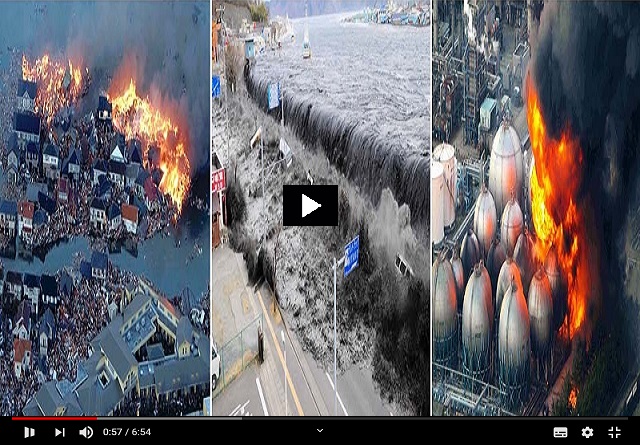
FIRST WATCH THIS VIDEO- All Americans Will Lose Their Home, Income And Power By December 27, 2025
Florida just became the first state to ban government-controlled digital currency. Here’s why that matters for every family.

Let me tell you a story that should terrify every parent in America.
In 2022, Canadian truckers protested COVID mandates. You might have agreed with them. You might have thought they were wrong.
But here’s what happened next:
The Canadian government invoked emergency powers and froze 210 bank accounts holding $7.8 million.
No trial. No due process. Just the government reaching into private citizens’ finances and turning off their money like flipping a light switch.
Families couldn’t buy groceries. Parents couldn’t pay rent. People who’d donated $50 to the protest found their accounts frozen.
And it happened in a Western democracy. In 2022. Not in some dystopian novel.
Now imagine that kind of power in a world where all money is digital, trackable, and programmable.
Where the government or corporations can monitor every purchase you make, decide what you’re allowed to buy, and shut off your financial life if you step out of line.
That world is closer than you think.
And Florida just became the first state to say: Not here. Not ever.
What Nobody’s Telling You About Digital Currency
Right now, only about 14% of U.S. consumer payments are made with cash. The rest are digital — cards, apps, electronic transfers.
That’s convenient. I use my debit card constantly.
But here’s what most people don’t realize:
Every digital payment leaves a trail. Banks and payment platforms automatically record where you shop, when you shop, what you buy.
Right now, that data is somewhat protected by privacy laws and corporate policies.
But what if the government issued its own digital currency — and gave itself direct access to all that data?
That’s exactly what a Central Bank Digital Currency (CBDC) would do.
A CBDC is government-issued digital money that can be:
- Tracked in real-time
- Programmed with restrictions
- Remotely controlled or frozen
- Set to expire if not spent by a deadline
This isn’t hypothetical. It’s already happening.
You might be living in one of America’s deathzones and not have a clue about it
What if that were you? What would YOU do?

What China Is Already Doing With Digital Currency
China’s digital yuan is 100% trackable and programmable.
Authorities can:
- Monitor every transaction in detail
- Set limits on how money is used
- Control which goods can be purchased
- Make money expire (use it by deadline or lose it)
Translation: The government can watch everything you buy and decide whether you’re allowed to buy it.
Think that can’t happen here?
President Biden ordered studies into a U.S. CBDC in 2022.
Over 1.5 billion people worldwide already live in countries with CBDC pilot programs.
And the early results should alarm every American who values freedom.
How Governments Use Digital Currency to Control Citizens
Nigeria: Force People Into Digital Money by Choking Off Cash
Nigeria launched a government digital currency. Adoption was under 0.5% — people didn’t want it.
So the government created a cash shortage to force people onto the digital system.
Result? Public chaos. Economic disruption. Riots.
But the government got what it wanted: control.
Thailand: Your Money Only Works Where Government Allows
Thailand’s new digital wallet restricts where people can spend money — limiting purchases to government-approved items in your home district.
Think about what that means:
You can’t drive to the next town and buy what you want with your own money. The government decides what’s “approved” and what’s not.
The Pattern Is Clear
When governments control the currency, they control the people.
And once that infrastructure is built, there’s no putting the genie back in the bottle.
Florida Drew the Line (And Your State Should Too)
This year, Florida enacted the first-in-the-nation law explicitly banning any federal CBDC from being treated as money in our state.
Translation: If the federal government issues a “digital dollar” that allows tracking or control, it won’t be recognized in Florida.
Governor DeSantis signed it with this statement:
“The government and large credit card companies should not have the power to shut off access to your hard-earned money because they disagree with your politics.”
At least a dozen other states — including Indiana, Alabama, and South Dakota — are considering similar bans.
Why?
Because we’ve already seen what happens when financial institutions can punish people for their beliefs.

The “Debanking” Scandal: When Banks Cancel You for Your Views
Financial surveillance isn’t just a government problem. Corporations are doing it too.
PayPal Wanted to Fine You $2,500 for “Misinformation”
Last year, PayPal briefly announced a policy allowing them to withdraw $2,500 from your account for spreading “misinformation.”
They backed off after massive backlash and claimed it was an “error.”
But the intent was clear: A tech platform thought it could directly punish you — with your own money — for saying something they didn’t like.
UK Banker Scandal: Closing Accounts Over Politics
In the UK, a major bank (Coutts, under NatWest Group) closed politician Nigel Farage’s account because his political views didn’t align with the bank’s “values.”
Internal documents showed his opinions on Brexit were noted in the decision.
It wasn’t isolated. Banks in Britain were shutting over 1,000 accounts every working day.
The scandal forced resignations of top bank executives and a government inquiry into what’s now called “debanking.”
It’s Happening in America Too
JPMorgan Chase quietly dropped rapper Kanye West, giving him 60 days to move his accounts after public controversies.
Chase bank briefly barred General Mike Flynn’s family, citing “reputational risk,” then reversed after public outcry.
These are famous people with resources to fight back.
What happens to you — a regular parent, a small business owner, a church donor — if a bank decides you’re “risky” because of your politics or faith?
How This Threatens Every Parent and Family
Let me make this personal.
Imagine:
- You donate to your church’s building fund. Your payment app flags “religious organization” and limits future donations.
- You buy a children’s book about faith. The algorithm notes “controversial content” and downgrades your credit score.
- You attend a school board meeting protesting curriculum. Someone films you. Six months later, your bank account is suddenly “under review for reputational risk.”
- Your teenager uses your card to buy a hunting rifle for a school shooting sports team. The transaction is flagged. Your family is now on a watchlist.
Sound far-fetched?
Florida just banned credit card companies from using special tracking codes that would create a registry of gun purchases.
Why? Because major card networks were discussing tagging firearm store purchases “to monitor mass shootings.”
Privacy advocates warned it would be misused to surveil lawful gun owners.
Florida said: Not here.
Your Right to Privacy Starts With Cash
Here’s something the digital payment companies don’t want you to know:
72% of Americans want to keep the ability to make some purchases completely private — by using cash.
74% of Americans oppose any digital dollar that lets government control what people can buy.
Over half of Americans still carry cash daily or weekly.
45% say they’d be upset if the U.S. became fully cashless. (Only 9% would be happy.)
Even Gen Z and Millennials — the most digital generations — about half say they’re not ready to give up cash, mostly due to privacy and fees.
Cash = privacy and autonomy.
When you pay with cash:
- No data trail to mine
- No algorithm deciding if you’re “allowed” to buy something
- No corporation or government watching
- No fees extracted
That’s why they want to eliminate it.
All Americans Will Lose Their Home, Income And Power By December 27, 2025
The Slippery Slope We’re Already On
We’ve seen the preview:
- Stores and stadiums going “card only”
- Apps that won’t accept cash
- Schools forcing digital payment platforms (with fees)
- Venues where your legal tender is “not accepted here”
Each step normalizes a cashless world.
And once cash is gone, every transaction you make can be:
- Tracked
- Analyzed
- Sold to marketers
- Reviewed by algorithms
- Flagged for “suspicious activity”
- Used against you
In China, apps like WeChat Pay are convenient — and integrated with government monitoring.
Reports show accounts automatically frozen for:
- Buying religious materials
- Having low “social credit” scores
- Behavior the government doesn’t like
Your money turned off as punishment.
Why Florida’s Law Matters for Every State
Florida’s Consumer Payment Rights law does three critical things:
1. Bans Federal CBDCs
No programmable, trackable government digital currency will be recognized in Florida.
2. Protects Against Financial Discrimination
Banks and payment processors can’t cut you off for lawful political or religious activity.
3. Preserves Your Right to Use Cash
Legal tender remains legal — you can’t be forced into digital-only systems.
This is preventative legislation.
It’s easier to stop surveillance infrastructure from being built than to dismantle it after the fact.
Think of it like this:
You don’t wait until your house is on fire to install smoke detectors.
You don’t wait until your kid is drowning to teach them to swim.
And you don’t wait until government has total financial control to protect freedom.
The Europe Lesson: Even They’re Worried
The European Union — not exactly a libertarian stronghold — is moving to legally guarantee citizens’ right to use cash alongside any digital euro.
Why?
Because even EU regulators recognize that inclusion and privacy require multiple options.
They understand what happens when a single system has monopoly power over money.
If Europe gets it, why can’t Washington?
What This Means for Your Family
Practical implications if we don’t act:
Your Kids’ Future
- Every purchase they make tracked from childhood
- Credit scores influenced by “approved” vs “unapproved” purchases
- Social pressure to conform because financial systems punish deviation
Your Business
- Can’t accept cash (excludes customers)
- Must use approved payment processors (with fees and surveillance)
- Risk of being “debanked” if someone doesn’t like your values
Your Faith
- Churches monitored through donation tracking
- Religious material purchases flagged
- Financial pressure to moderate beliefs
Your Politics
- Donations tracked and used against you
- Protest support = financial risk
- Self-censorship to protect bank account
Emergencies
- Power outage = no way to buy food (digital systems down)
- Banking error = frozen out of economy
- Cyber attack = commerce stops entirely
Cash is the backup system when digital fails.
Cash is the privacy tool when surveillance overreaches.
Cash is the freedom option when corporations or government get too powerful.
What You Can Do Right Now
1. Support Cash Acceptance Laws in Your State
Find your state legislators. Tell them to follow Florida’s lead.
Model language: “I support legislation banning federal CBDCs and protecting consumers’ right to use cash. Financial freedom and privacy must be protected.”
2. Use Cash Regularly
The more we use it, the harder it is to eliminate.
- Pay cash at local businesses when possible
- Keep cash in your emergency kit ($500+ in small bills)
- Teach your kids to use physical money
3. Demand Transparency from Banks
Ask your bank:
- What’s your policy on closing accounts for political/religious reasons?
- Do you share transaction data with third parties?
- Will you commit to not participating in CBDC surveillance?
If they won’t answer, find a bank that will.
4. Support the Payment Choice Act
Federal legislation requiring businesses to accept cash for transactions under $500.
Contact your U.S. Representative and Senators. Tell them to co-sponsor it.
5. Educate Your Community
Most people have no idea this is happening.
Share this article. Talk about it at church, PTA meetings, your book club.
This isn’t partisan. It’s freedom.
The Bottom Line
Your money should be yours.
Period.
No government should be able to program it, track it, or turn it off because you donated to the “wrong” cause or said something unpopular.
No corporation should be able to cut you off from the financial system because an algorithm flagged you as “risky.”
No payment processor should be able to fine you for “misinformation” or wrong-think.
These are not hypothetical risks. They’re happening right now in other countries — and starting to happen here.
Florida drew a line in the sand.
The question is whether the rest of America will do the same — or sleepwalk into a surveillance state where every purchase is monitored and freedom is one frozen account away from extinction.
I know what I’m choosing.
I’m choosing freedom.
I’m choosing privacy.
I’m choosing a future where my kids can spend their hard-earned money without Big Brother or Big Tech watching every transaction.
Florida made the first move. Now it’s your state’s turn.
The most shocking videos in the world!

source- rebekahricks.substack.com
I also invite you to take a look at this site- www.whatfinger.com


