The Bill & Melinda Gates Foundation has poured more than $168 million into creating a malaria vaccine that involves infecting mosquitoes with genetically engineered parasites that then infect humans.- See video!
Scientists have genetically engineered malaria parasites and are using mosquitoes as flying syringes to inject these parasites into humans, according to new research from Gates-funded Leiden University Medical Center in the Netherlands.
GONE VIRAL- Imminent Threat: Three Ominous Forces Merge to Ignite Violence Across the U.S. in 2024- SEE VIDEO!
The study, published in December in the New England Journal of Medicine, found that delivering genetically modified malaria parasites through mosquito bites induced an immune response in human participants without causing the disease. The plan? Create a next-generation malaria vaccine that uses mosquitoes to vaccinate humans whether we want it or not.
Hoping for a better outcome in this study, researchers engineered GA2 to stop developing around six days after infection before the parasite could infiltrate the blood cells and evolve into its deadly phase. Bill Gates-backed Gavi, or The Vaccine Alliance, says this allows the bite to trigger the immune system like a vaccination without causing disease.
To test this theory, scientists used mosquitoes as live delivery mechanisms, infecting the insects with the modified parasites and then allowing them to bite human participants.
A group of 43 healthy adults between the ages of 19 and 35 who previously had no record of malaria infection were exposed to 50 bites from GA2-infected mosquitoes, 50 bites from GA1-infected mosquitoes, or 50 bites from uninfected mosquitoes (placebo) in three vaccination sessions at 28-day intervals.
The bites delivered the genetically modified parasites directly into their systems, mimicking a natural malaria infection. Researchers then screened participants for any side effects and measured their immune responses. Three weeks following their third devouring by mosquitoes, the participants underwent malaria infection with five bites from infected mosquitoes.
According to the study, eight of nine participants (89%) in the GA2 group received protection against malaria, one of eight (13%) in the GA1 group received protection, and none of the participants in the placebo group received protection.
The study reported that participants developed antibodies and T-cell responses against malaria, suggesting that their immune systems recognized the parasite and prepared defenses against future exposure without developing the full disease. None of the participants reportedly developed severe adverse events that “were considered by the investigators to be related to the trial intervention” or that progressed to clinical malaria.
However, the study’s method and funding source have raised significant concerns. The Bill & Melinda Gates Foundation awarded over $1.5 million to Leiden University Medical Center to understand “population and geographic factors affecting response to malaria vaccines in endemic countries.”
In November, the Gates Foundation awarded another $2.2 million grant “to improve health outcomes and prevent premature death in populations around the world suffering from high rates of malaria infection by developing next-generation malaria vaccine candidates.”
Critics argue that allowing mosquitoes to act as “flying syringes” crosses a line that raises serious questions about informed consent, safety, and the long-term consequences of genetic engineering:
What happens if genetically modified mosquitoes are accidentally released into the wild?
How will researchers ensure that the modified parasites do not evolve or interact with other species in harmful ways?
What are the long-term effects of exposure to these genetically engineered parasites?
What about informed consent? Perhaps some people, especially those who are not at risk of being exposed to malaria, don’t want to be bitten by these mosquitoes at all.
Through his foundation and personal initiatives, Bill Gates has sought to influence an extensive array of sectors over the years, including public health, media, education policy, artificial intelligence, insect populations, American agriculture, energy, foreign policy, and even the environment itself.
In a January 2021 MSNBC interview, Gates criticized content that undermined trust in masks and vaccines, positioning himself as a vocal advocate for global health interventions. Since then, his foundation has poured over $168 million into malaria vaccine research.
In an August blog post, Gates highlighted the challenges posed by malaria, describing the parasite as “remarkably adaptable” and likening efforts to control it to “a global game of high-stakes whack-a-mole,” where resistance to drugs and interventions emerges in new forms. For Gates, a "malaria-free" future hinges on deploying mRNA vaccines and the genetic modification of mosquito populations.
When asked about his expansive and controversial efforts in a Times interview, Gates defended his initiatives, stating, “If you don’t like what I’m doing, give away your money too.”
Gates framed his philanthropic efforts as essential, particularly in areas where public funding or political will has fallen short. Yet his approach allows him to dictate solutions with little regard for public input or democratic processes. Gates’ outsized influence often bypasses the mechanisms of accountability that typically govern public health initiatives, leaving critical decisions in the hands of one billionaire rather than the broader global community.
“One of our biggest challenges isn’t scientific; it’s financial and political,” he noted.
Gates believes that societal and structural challenges can impede the advancements his foundation seeks to promote. Yet these experiments create risks that society didn’t sign up for and isn’t fully prepared to handle.
In case you have been asleep for the last five years or somehow managed to not buy any groceries, you should know that the price of groceries has quadrupled over as many years. For the rest of us feeding our families, we are intimately aware of how much more we have had to pay for groceries in recent years. It has gotten so bad that many families that used to be able to purchase roughly a shopping cart of groceries for $100 now are paying upwards of $400 dollars for less food of less quality. Coupled with high prices of gas and energy, most of us have experienced a large net loss of our purchasing power as our disposable income has all but vanished. Of course this directly contradicts the Biden administration assertions that there has been little to no inflation and economically things are better. Ask yourself this, do you actually have more disposable income than you did just a few years ago? Has your quality of life improved? Sadly, the answer is more often than not a resounding “NO” as the numbers of individuals on government assistance programs like food stamps has exploded. This article will discuss the basics on how to weather the coming food price crisis.
You must understand that our current state of decay is just the beginning as things will get much worse in the United States. For starters, California is experiencing drought that is decimating its agricultural industry as we outlined in abother article. Far worse is that our government is moving closer and closer to a totalitarian state run by left leaning Marxists heavily influenced by global bankers and corporate elites that care nothing for you and are only focused on increasing their power, wealth, and control over you. Add to this the fact the Federal Reserve continues to counterfeit over a trillion dollars a year and then bills you, the taxpayer, for the created debt even as you suffer from the very real devaluation of the dollar because of the Federal Reserve’s engineered inflationary measures. These few issues are by no means all inclusive, but illustrate some of the major drivers pushing costs higher and higher as your wages and real earnings are decimated. These government programs will only intensify as higher taxes, fees, and penalties are lumped on by local, state, and federal governments to offset their rising operating costs, which rob you of any remaining disposable income. Thus, it begs the question that many are asking…. “How will I be able to feed my family and still pay my bills?”
Fortunately, the answer is neither new nor complex. One must become self-sufficient. Self-sufficiency is the same solution our forefathers intuitively recognized and the maxim most farmers, pioneers, and Americans lived by up until the last half of the 20th Century. Many thought the time for small farms and garden plots was gone for good, but the crisis of increasing food prices has driven Americans back to rediscovering that the old ways were in fact better. So, if you have been saving your survival seeds for when things get bad, you should seriously consider planting them this year and procuring new seeds for future crops while you still can. Once things go beyond the tipping point to a full blown crisis, it will be too late to plant, grow, harvest, and use your seed stores. The garden will provided you affordable, healthy, great tasting, fresh food when no one else can afford or find it in grocery stores. Further, any excess can be sold or used to barter for other goods you may not have in surplus.
A healthy garden takes years to fully develop to its maximum potential so starting now allows you to experiment with crops, fail (yes, you will have failures), build a tool inventory, and begin building an inventory of food stores via dehydration (drying) and canning. You will learn what varieties of plants grow best where in your soil. You will also get to taste various vegetables and decide which are best suited to your family’s palate. Devising a pest control strategy that works will also be vital. All of this takes time, sweat, and practice. There are no real shortcuts to this so get started now.
To begin, select the best land you can for your crops. This may mean moving to a new location with better soil, water access, and sunlight or simply developing your backyard. For you folks still imprisoned in the cities, you may want to invest in hydroponic systems or rooftop gardens. Having the right tools will be critical. The best hand tools are not the ones made today, but old antique hand tools with solid steel implements. You can often find these cheaply online or at flea markets and yard sales. Make sure you have redundancy. You will also need an ample supply of good seeds. I recommend that you stick with quality heirloom seeds that have been optimized for your growing conditions. Make sure you get a wide variety of seeds so that you can experiment with different crops. For example, if one specific variety of tomatoes does poorly, you may find a different variety does very well saving you from a total crop loss for the season. You will also need to devise a method to protect your crop from pests such as animals, insects, and diseases. I have found solar powered electric fences are the best method for keeping out animals like deer that will wreck an entire garden in a single night. The solar powered electric fence is very easy to set up and affordable. Dusting crops like beans and potatoes with lime does well at keeping insects back while preventing nutritional diseases. I also found using a torch around plants to kill weeds is an effective organic solution to weed control. When it comes to fertilizers, bone meal and manure are two of the best organic solutions. Just make sure any manure you use is seasoned well so that you don’t introduce invasive weed species to your soil.
For those of you looking to grow gardens or enter into small farming operations, you may also want to employ low profile or clandestine methods. Many of our readers live in suburban neighborhoods with unconstitutional and oppressive home owners association (HOA) covenants that ridiculously forbid gardening. In these areas fencing in your yard may be your easiest option. If that isn’t possible, many people have turned their basements into mini greenhouses, but run the risk of drawing attention of local authorities that may mistakenly suspect illicit marijuana grow operations are afoot. In this case it may be best to actually let local law enforcement know what you are doing to prevent a mistaken and highly dangerous SWAT raid on your home. However, if the wrong people know you have food, they may target your residence to steal your crops so discrete is good. Those of us lucky enough to be in rural areas do not have oppressive HOAs and can grow large gardens, but could become subject to crop confiscation. The US Department of Agriculture (USDA) has steadily increased its efforts to identify all farming operations throughout the country and many suspect that in a time of crisis the government could use this information to confiscate crops to feed the masses. As protests in Kiev turn violent, an important, illustrative lesson from the Ukraine’s history comes to mind. During the period between 1932 and 1933 when the Ukraine fell under Soviet control, an estimated 12 million Ukrainians were intentionally starved to death as a result of resisting Stalin’s takeover of power and government mismanagement of agricultural policies. During this period, the communist government forced confiscation of all household foodstuffs and restricted the population movement to other areas all while shipping off, warehousing, destroying, or leaving unharvested millions of tons of grain that could have fed the Ukrainians. The urban populations suffered the worst and died by the millions of starvation and disease while the rural populations were demonized and blamed by the communists for the government’s actions. If you have any question as to why this genocide was carried out, Henry Kissinger succinctly explains it when he stated that if you want to control the population, control its food supply.
This Ukrainian lesson illustrates how a centralized government like ours that mismanages policies and is continuously seeking greater power could seize your crops during a crisis to effectively control our citizens. To avoid this, don’t report your crops to the government. Further, plant multiple gardens and crops in various areas throughout your property. One garden would be overt while the others would be hidden and made to “NOT” look like a standard garden. In fact, if your garden looks like a fallow field of weeds or just a part of the forest it will draw little to no attention. In addition, cultivate wild crops and livestock considered “weeds” and wild animals so that they go overlooked even by the most zealous commissar sent by the government to inspect, record, and confiscate your crops. This technique is highly successful and practical for preppers since even the most savvy of government bureaucrats are generally idiots in respect to anything that actually requires real work or true practical knowledge. The average USDA inspector couldn’t tell you the difference between spinach and burdock and certainly wouldn’t recognize chicory and dandelions as a staple food crop. Wild leeks (ramps) and asparagus also would be passed over by even many country folks. They also wouldn’t recognize your cover crops that feed a disproportionately large deer herd, but certainly would be able to tag, number, and seize every chicken and head of cattle you may possess. Fish ponds are also nice additions because unless the bureaucrat is ready to dig out and drain your pond or spend a lot of time learning to fish, any fish you have stocked will also go under reported. Fruit and nut trees interspersed with the forest also will most likely go unnoticed so look at planting stands of these trees in small clearings vice large orchard settings.
On the backside of raising your crops, you must secure your harvest. The very best way I have found to accomplish this is by building multiple low profile root cellars away from your house. A root cellar can be very simple (essentially a hole in the ground with an insulated cover) where root crops, fruits, and canned goods can be stored for long periods of time. These natural storage vessels can be constructed in a way as to be virtually invisible to all but the most astute observer. By utilizing outdoor food storage locations, you prevent your food supplies from being looted or confiscated in their totality while building a strong alibi respective of “having no food.” Anyone doubting you would certainly search your home and after finding only the minimum staples would be forced to conclude that you indeed have no food and thus, could not be growing additional food since it would have to be stored somewhere.
In summary, you have been warned of impending food price spikes even as your wages are diminished by our central economic planners. Your choices now are to either run the risk that all will be well and government that created these problems will suddenly fix them or implement your last minute survival food production plans. I am recommending to all of our readers to plant every inch of land they can this year since I have become convinced that our economy is teetering on the brink of its greatest economic collapse in history. Food will become scarcer and prices will rise with every coming month. This is a certainty. If you decide to plant the worst outcome would be to have an overabundance of food come the autumn harvest and critical practice and experience growing a garden for real. Although we preach last “minute” survival, “minute” is very relative in respect to gardens where a more apt description would be last season survival. Failure to plant your crops this spring will delay any chance of a food crop by not just a year, but a year and a half because of the lead-lag time between planting and harvesting. Time is wasting so get busy!
A lesson I learned being a policeman: smugglers often camouflge stuff using something especially boring and / or unappealing. For example, a drug trafficker might hide a stash of heroin inside a consignment of jockstraps or incontinence pants. Politicians are a bit like drug traffickers, except without the business acumen, imagination or rudimentary sense of fair play. But, instead of jockstraps or sanitary products, they hide their most outrageous shit inside legislation. Legislation so dull only a lawyer or lobbyist would bother reading it.
Then, by the time the legislation passes through the gimlet-eyed scrutiny of the Mother of Parliaments (you there, at the back. Stop giggling), the devils hiding within the legislative detail come out to play. By the time the devils have had their fun, leaving behind a flaming hellscape, the politicians are either dead, in the Lords or making squillions advising dictators.
I was reminded of this earlier in the week when, browsing the internet, I saw two random yet strangely interconnected stories. One concerned local authority traffic wardens going on strike in south London. The link, by the way, takes you to the Socialist Worker website (hello, Comrades!). Anyhow, this reminded me – yes, I’m fun at parties – of the Police Reform Act 2002, another pearl of Blair-era chicanery. This one really did conceal a multitude of devils, lurking in a dense thicket of detail.
The other article was across the ideological aisle, in The Spectator, and concerned Angela Rayner’s eye-wateringly dull proposals for ‘English Devolution.’ This, were I being cynical, appears to be a blatant attempt at gerrymandering and foisting leftish Sadiq Khan-style regional commissars across England. Were I not being cynical, I’d say this appears to be a blatant attempt at gerrymandering and foisting leftish Sadiq Khan-style regional commissars across England.
Why, Dom, I hear you ask, are these two stories connected, let alone of interest? What do they have to do with your usual beat of all things police-ish?
Because they are portents of things to come, my friends. The future of law enforcement is one of unintended and semi-intended consequences. It’s a future of chickenshit law, enforced primarily for profit, with a side-order of virtue signalling. It’s also a future where, ironically, there’s not much room for the police as we know them. Future Cops sit in riot vans, waiting to quell violent disturbances beyond the abilities of Group 4 or Mitie to contain.
As an aside, I’m not actually knocking the private security industry, or the principle of making a profit. I’m onboard with capitalism being the least-worst way of doing things. I understand markets. I know who Ludwig von Mises was. I also know nature abhors a vacuum. I do, however, think there are powers and responsibilities the State should preserve for itself. Why?
Accountability.
I know, you’re still giggling at the back. But ask yourself this – would you rather take your chances with the local magistrates court, a council, or a company complaints department? Because this is where we’re going. The civil remedy / ‘give ‘em a ticket’ route of law enforcement.
So, are you ready to explore the future? You are? Excellent. Step into my Doctor Who-style police box, while we zip through time and space to see where the devils might take us on this spin of the wheel…
Take that, Mrs. Miggins!
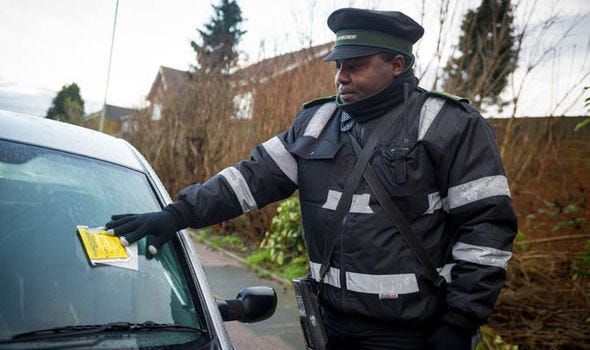
It’s 1994 or thereabouts. I’m a uniformed police constable. I’ve noticed the local council have recently deployed a small army of private traffic wardens, mainly spotty young men in gauche, ill-fitting uniforms. They’re armed with handheld devices the size of games consoles, capable of spitting out tickets at an alarming rate. The police have nothing as administratively efficient, but we aren’t revenue-generators. Just boring, unprofitable law-enforcers. Our Metropolitan Police traffic wardens, the ‘Yellow Peril’, are slowly being withdrawn as more and more traffic offences are decriminalised.
Except…
The council wardens were purely interested in parking infringements, which are discretely different from parking offences. Double parking? Not interested. Parking on a pedestrian crossing? Not interested. Obstruction? Not interested. ‘That’s a police job, mate.’
Ah, but Mrs. Miggins in her Nissan Micra, two minutes over her allotted time in a parking bay? The wardens would descend like angry hornets, ticket machines whirring. It got to the point where, if I saw a private parking attendant behaving like a knob, I’d wander over and tell them to do one. I’d cite my ‘constable’s prerogative’ to overrule them. Yes, this was allowed. As a primo barrack room lawyer, I checked. I felt like Robin Hood in a beat duty helmet.
Then the local wardens started ticketing police vehicles. One even clamped an unmarked CID car while a colleague was making an arrest. We’d leave our police logbooks on the dashboard to let parking attendants know who we were. The jobsworth in this case didn’t care, but the look on his face when my colleague nicked him for obstruction was priceless. This led to an interesting conversation between the local council parking office and our DI.
What did I take away from this?
If you give someone a week’s training, a silly hat and a quota of tickets to fill, that’s exactly what they’ll do. And they’ll do it without any sense of proportionality, humour or commonsense. They’ll wind up the public, not make a great deal of difference to road safety, but WILL generate revenue.
Which, of course, was the point all along.
Now, back to the Tardis, before the daleks wardens slap a ticket on it. We’re off to 2002, and the deeply exciting Police Reform Act.
The splintering of police functions came from all directions – PCSOs were police staff, not private or local authority employees.
Welcome to 2002! There’s a war on terror, Tony Blair’s plotting to invade Iraq and Nickelback are one of the World’s biggest rock bands. I know, it’s grim. ‘How you remind me’ got to No. 4 in the UK singles charts.
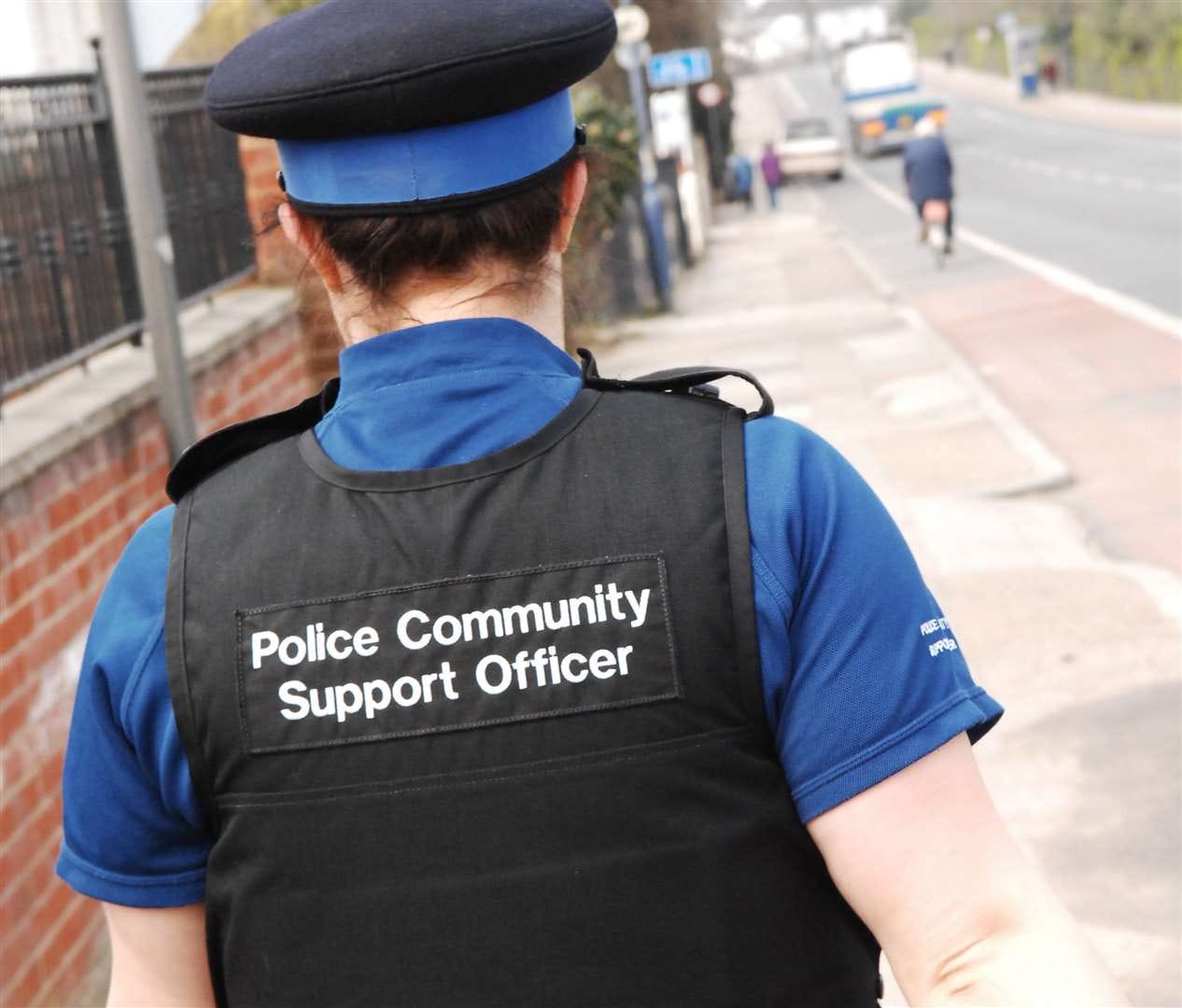
This is the year Parliament passed a dense, chunky and spectacularly dull piece of legislation called the Police Reform Act. In September, Police Community Support Officers (PCSOs) were introduced by the Home Secretary, David Blunkett.
This article isn’t about PCSOs or the efficacy thereof. ‘Blunkett’s Bobbies’ were introduced as a cost-saving compromise between creating a European-style municipal police force or effectively privatising low-level law enforcement (a concept both New Labour and Conservative governments flirted with). PCSOs had fairly limited powers. As one high-ranking officer commented, ‘PCSOs cost me 70% of a constable’s salary but with 30% of the functionality.’ I presume that senior officer retired at the rank he was at when he uttered such heresy, as PCSOs were the future.
Were PCSOs a success? I never worked with any (although we investigated plenty on the anticorruption command). I suspect, like everything else, some PCSOs were good, some were indifferent and some were awful. Still, the Rubicon was crossed; the 2002 Act began devolving powers hitherto entrusted to sworn police officers (Crown Servants, non-unionised and subject to police discipline regulations) to auxiliary staff (unionised employees). The upshot? Neighbourhood policing was increasingly delivered by civilianised staff with no powers of arrest.
Genius, eh?
The 2002 Act did something else. It allowed Chief Constables to confer some police powers on all sorts of non-sworn police staff, council employees and private contractors. Written in the dullest possible language, ‘community safety accreditation schemes’ were among the devils lurking in the detail. It’s why local councils now employ a bewildering range of ‘wardens’, ‘rangers’, ‘safety officers’ and other rent-a-cops with powers to deal with antisocial behaviour.
I’m not being disrespectful to the people who perform these jobs. I’ve seen some of them get stuck in and help coppers outnumbered by scrotes. I simply believe the streets should be policed by fully-trained constables, not people who’ve passed the accreditation for an SIA licence. Of course, the police surrendered their role, for reasons I’ve discussed elsewhere, not least to play at being social workers. You can’t blame the market.
Why, then, did New Labour decide to split the police monopoly on law enforcement?
Cost, of course. Coppers weren’t cheap. There was also a growing feeling in Government the police were hidebound. Moribund. Unable to move with the Public Sector Finance Initiative, get-filthy-rich times. And Tony Blair reportedly hated the fact he couldn’t simply pick up a phone marked ‘police’ and start giving orders (especially after the farmers and petrol strikes).
So sod the police. The market will provide. Right?
That was 2002. Now, to the Tardis my friends, there’s plenty of room. There’s a bloke with a wheel clamp and a funny hat over there, giving me a dirty look. We’re off to 2023!
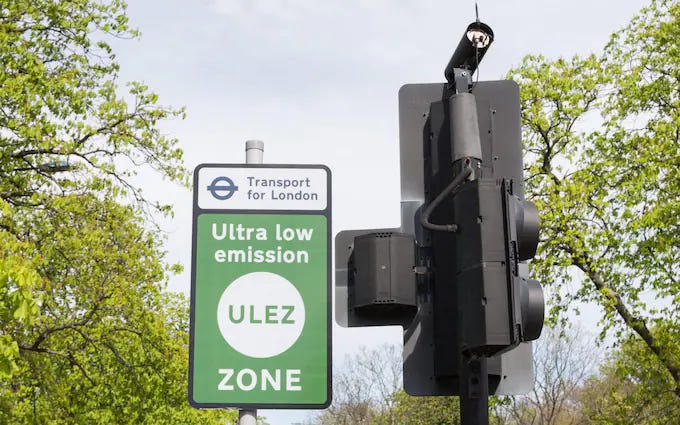
The hated London ULEZ. Hey, Sadiq, any chance you install a few Zombie knife detection cameras while you’re at it?
In 2023, the Mayor introduced the Ultra-Low Emission Zone across all of London’s 32 boroughs, causing much wailing and gnashing of teeth. I’m told it’s impact on pollution has been negligible and the traffic is as bad as ever. Nonetheless, it’s generated £500 million quid!
There’s a theme developing, isn’t there?
I’ve written before about the social and political issues around using technology to rinse the public enforce the law. In any case, ULEZ gives us a clue as to the future of law enforcement, especially the blurring between criminal and civil liability. Increasingly, we’re seeing stuff that would hitherto have been a criminal matter demoted to a civil dispute.
Why?
Well, it saves on pesky courts for starters. Plus, think of all that lovely revenue. Give people tickets (well, people who cooperate with council staff, not drunken, punchy, druggy criminals) and let them argue the toss later. If they can be bothered. Trebles all ‘round!
This brings me to 2025 and Angela Rayner’s white paper, which promises local authorities even more powers. As law professor Andrew Tettenborn writes:
Under Rayner’s proposals, councils will be given remarkably open-ended powers. The government gives comforting examples, like cycling on footpaths or climbing park trees: but it’s quite possible to imagine much less reassuring instances. What about a ban on, say, vaping or eating fast food in the street, displaying controversial posters on your front door, or holding boozy parties on your front patio? At present we needn’t worry too much about such extreme measures: however keen local apparatchiks may be to pass them (and fanatics abound in local life), they won’t get past the ministry. If the government has its way, however, this would change drastically. True, an entirely outrageous measure might be struck down as outside the powers of the authority. But that is scant comfort to the person confronted by petty officialdom who hasn’t the time or money to argue an uncertain legal toss in court.
This is the road to anarcho-tyranny. The police and council couldn’t be arsed with plagues of shop-lifters. But walking your dog without a poo bag? Form a squad. Imagine what the town hall gauleiters will be able to achieve with facial recognition systems? ANPR cameras? Imagine the microaggressions or environmental infractions they’ll be able to fine you for. If you think I’m being overly dramatic, I give you social credit systems.
Now, one more trip in the Tardis. To where? 2040. I want you to see where this is heading.
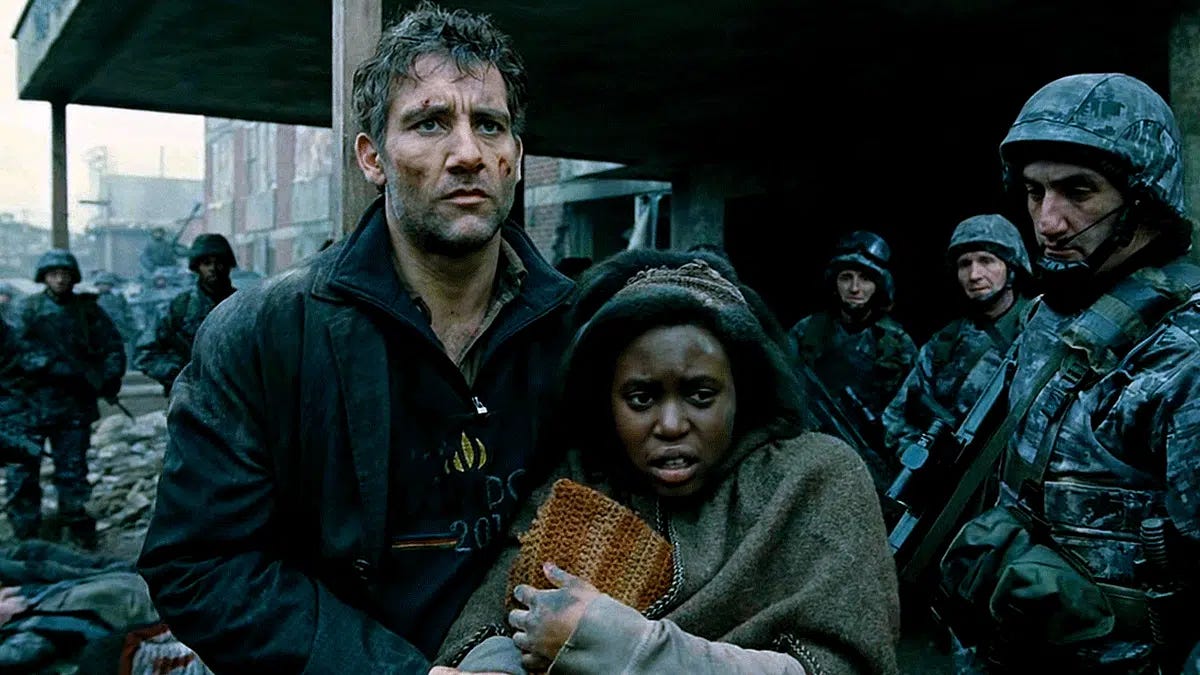
Members of the public at a local authority carbon footprint monitoring checkpoint, 2040. It’s suspected their heat-pump licence is out of date.
Here’s an outer London borough in the summer of 2040, which shall remain nameless. I can reveal, however, the council’s run by a rump of anti-Faragiste Liberal Democrats. The first thing you’ll notice is the relative absence of police officers. Yes, the burnt-out cars and empty shops are noticeable too, but the first point informs the second. There are police officers about – some are in the multiagency control podule, tracking microaggression infractions using a battery of biometric and social media analysis tools. There’s also a personnel carrier full of Kinetic Intervention Officers parked nearby, for when the pubs chuck out. Somebody needs to check the drinkers have their alcohol permission apps installed.
Until then, the streets are the responsibility of a handful of street rangers, private security guards and health & safety ‘wellness pastors’, offering advice to passing addicts on where to find clean needles. These law enforcers, such as they are, hide in a security booth protected by armoured glass and razor wire. They only venture out if absolutely necessary, as personal liability insurance is prohibitively expensive. So is protective equipment (one of the street pastors had her Kevlar vest penetrated by a 5.56 round last year).
Most local authority law enforcement is concentrated in nearby LeafyVille, a pleasant suburb two miles away. LeafyVille is protected by electric fences and private dog patrols. There, the council ensures residents have valid licences for virtually everything, from their ESR (environmental sustainability rating) to their EVRA (electric vehicle range allowance). The wealthier, occasionally put-upon residents of LeafyVille often forget the bewildering range of by-laws they’re required to obey, which means a healthy revenue stream for the council. Some street rangers even offer a pre-pay fine app, which offers a 15% discount on routine infringements. Six fines earn you a free oatmeal-milk drink!
Where this revenue goes remains a mystery, though. The roads remain potholed and the refuse collections irregular. There is, however, a gleaming new ‘museum of decolonisation’ being built next to the town hall (the curator happens to be married to a local councillor). The new Government has promised to end such politically-charged public spending, but local authorities seem impervious to central diktat and what remains of the civil service still refuse to return to their offices.
Occasionally, the mental health of LeafyVille residents deteriorates due to the pressures of life in the 2040s. They even, occasionally, end up murdering each other. Luckily, the national police CID are funded well-enough to solve most of these terrible crimes (even if unprofitable prevention programs have long since withered on the vine). Ditto the Kinetic Intervention Officers, as the non-LeafyVille residents, a disobliging bunch, occasionally indulge in ‘extreme-right wing’ riots.
The few pensioners who haven’t shuffled off to a Voluntary Death Pod still live in LeafyVille. Gnarly and grouchy, they still remember The Good Old Days. ‘We warned you’, they grumble, watching smoke from burning cars smudging the horizon. Then they drink unlicenced alcohol and smoke illegal tobacco. Luckily, the oldies seem to forget to update their apps routinely enough for the authorities to track their activities. If they did, counter-extremism officers might learn of the youngsters who visit the pensioner’s apartments. They sit, spellbound, drinking gin and listening to tales of life before the Internet. Before social media. Before a world that excels only at giving orders. Some of the kids go as far as uninstalling the social monitoring apps from their devices. Disappearing. Melting into the shadows. Planning, perhaps, for a return to the past.
A past, they’re sure, when things really were better.