Thursday, May 8, 2025

Latest news on the blackout in Spain


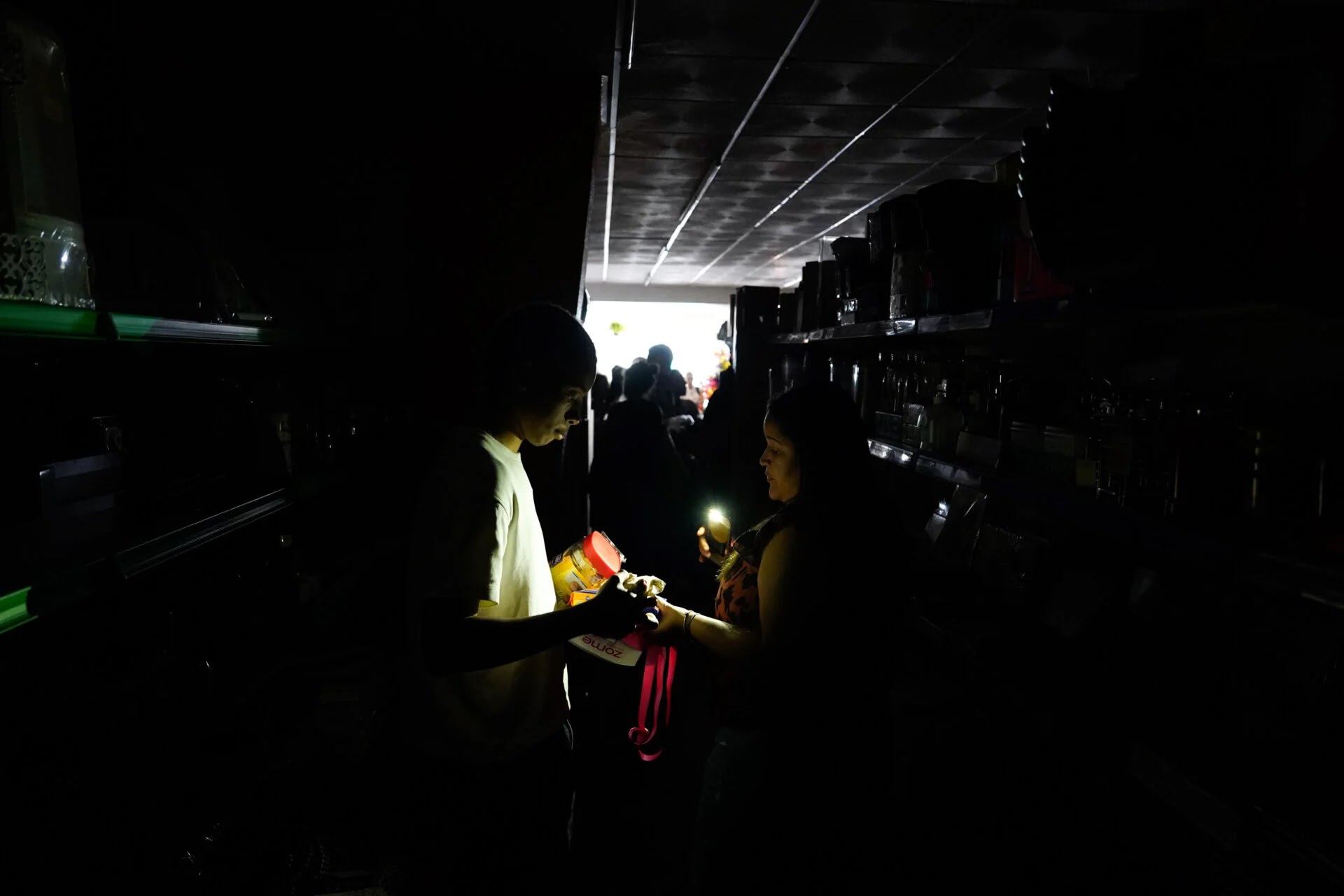
Just as happened with the opening of the dams in Valencia (Spain), which official authorities continue to attribute solely to weather conditions without offering a complete explanation, the same situation is now repeating itself in the face of the widespread blackout in Spain, Portugal, and southern France. New data is emerging, but, as usual, more doubts than certainties prevail.
We begin with the news that in 2021, the Austrian government warned of the possibility of a major blackout that could affect Europe in the next five years. Austrian Defense Minister Klaudia Tanner was the one who publicly warned about this threat, stressing the importance of taking preventive measures in the face of a potential energy crisis.

It was in October 2021 that the Austrian government issued a warning that, at the time, went unheeded by most in Europe (supposedly). However, today, in light of recent events, that warning seems like an eerie and chilling omen. Under the slogan “Blackout: What to do if everything shuts down?“, the Austrian Ministry of Defense distributed leaflets, organized national drills, and posted official videos on YouTube instructing the population on how to survive a massive energy collapse. Minister Claudia Tanner was clear: “Blackout is not a possibility, it is a certainty,” she stated, while General Robert Bridger warned of “an event that would paralyze cities and destroy the digital economy.“

Official video of the Austrian government

But what motivated Austria, a country with no obvious energy crisis at the time, to mobilize its army and civil society? Experts pointed to four critical factors: dependence on Russian gas, the increase in cyberattacks on infrastructure, the vulnerability of power grids due to reliance on intermittent renewable energy, and a lack of investment in maintenance. However, behind these technical reasons, many suspect a darker plan, and that what happened could only be a test or warning of what is to come.

On the other hand, there is a TikTok video published on April 15, 2025, in which he predicts a “partial global blackout” that would occur on April 28, 2025, stating that it would be “the beginning of a real blackout” with bank failures, social media outages, and urban chaos. The message, shared millions of times, included a reference to a forgotten episode of The Simpsons where Homer receives a message on his television: “Shutting down humanity.” We know this cartoon series is part of the system; it’s not just a coincidence, but functions as a tool that offers clues and snippets of what’s planned to happen, akin to Predictive Programming.

Finally, we have news of a strange text message that Catalan mayors (Spain) received warning of a power outage hours before the major blackout. On the night of Sunday, April 27, at 10:38 p.m., the mayor of Vilaplana, Josep Bigorra, received a message saying: “We are working to restore the power supply as soon as possible.” Minutes later, the mayor checked the E-Distribución website for “outage” symbols in places like Reus, the capital of Baix Camp. But nothing happened; the grid remained stable. “There wasn’t a single outage,” says Bigorra, who shared the text message on social media, puzzled. Was it a computer error? A false alarm? Or, as subsequent events suggest, a chilling warning of what was to come?
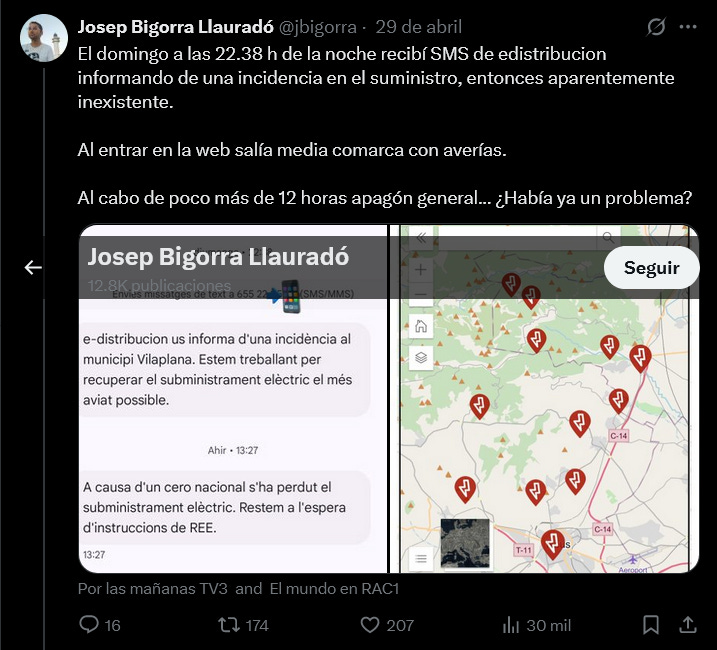
This message, however, was no exception. Other mayors in the region reported similar receipts, all at the same time and with the same contradiction: warnings of nonexistent outages.

Fourteen hours later, at 12:33 on Monday, April 28, Spain was completely blacked out, in an unprecedented event. A second text message arrived in Bigorra with a disturbing explanation: “Due to a national zero (sic), the power supply has been lost. We are awaiting instructions from Red Eléctrica Española (REE).“

The term “national zero” lacks a recognized technical definition. A typo? A cipher? While the Spanish government blames an “unprecedented incident,” official responses are brief. Prime Minister Pedro Sánchez announced “open lines of investigation,” but no one explains why the alarm systems failed, or why it took some municipalities more than 24 hours to restore power. The coincidence between the premonitory text message and the massive blackout has generated a flurry of theories. Independent experts point out that the messages could be part of an internal emergency protocol at E-Distribución, designed to prepare authorities before a scheduled outage. But what does a “national zero” have to do with an unannounced blackout? Could the text message have been an unauthorized leak from a compromised system? The words “national zero” evoke scenarios from military drills, such as those described in declassified NATO documents.

Questions Officials Fail to Answer:

  • Why did E-Distribución send false alerts hours before the collapse?
  • What does the term “national zero” mean?
  • Why did the Iberian electricity system, designed to withstand isolated failures, collapse completely?
  • Are there internal records that prove a structural failure prior to the blackout?

While authorities persist in their attempt to clarify the facts, citizens remain in uncertainty facing an enigma that seems to have overtones of a cover-up. The text message, far from being a simple error, could represent the tip of the iceberg of secret plans.

Recently, after the blackout in Spain, Austrian army spokesman Michael Bauer recalled on his X (formerly Twitter) profile the October 2021 article that warned about this possibility: “If no one is prepared, the State has to take care of everything. If we all prepare at home, we help everyone.” Bauer stated that the Austrian Army has been preparing for an extreme scenario for years: a massive collapse of power grids in Europe that could last for days.

Crisis prevention expert Herbert Saurugg, initiator of the “Suddenly, a Blackout!” initiative, expressed that “it’s time to take this issue seriously.” Saurugg insisted that the population must be prepared to help themselves in emergencies, recommending that everyone have enough water, canned food, medicine, flashlights, and other supplies to survive for about two weeks.

Furthermore, the German government has also addressed this issue, holding a day dedicated to disaster relief under the motto “Blackout: What to do if nothing works?” The importance of public awareness and information has been emphasized.

The preparedness recommendations from both Austrian and German authorities for a possible large-scale blackout are detailed and include:

  • Stockpile resources: Fuel, candles, flashlights and (charged) batteries, canned goods, pasta, nuts, milk, and drinking water. In the first moments of the blackout, take the opportunity to collect running water before the supply is interrupted.
  • Prepare for the cold: Since many heaters are electric, it is advisable to have blankets, sleeping bags, and warm clothing, and consider sheltering with friends or neighbors in better-insulated homes, or going to aid stations set up by the authorities.
  • Cash: Have enough to sustain the family for at least 5 days, as ATMs and cards would be useless.
  • Personal emergency kit: Each family member should have a backpack prepared for 5 days with clothing, first aid supplies, hygiene items, a can opener, a battery-powered radio, a flashlight, and a cell phone with a charger for when the power returns.
  • Establish support networks: Arrange meeting points with family and friends, and lay the foundations for a neighborhood cooperation network.

But there’s more: in February 2025, the European Commission launched a campaign titled “Prepare for the Unpredictable,” recommending that citizens create “survival kits” with water, non-perishable food, hand-cranked radios, and batteries. Is this a preventative campaign… or a preparation for something already planned?

The beginning of something bigger?

The possibility of a global blackout, which would leave humanity without electricity or internet, has gained relevance following the recent blackouts in Southern Europe and the collapse of social media platforms such as Facebook, Instagram, and WhatsApp a month ago. These events generated fear and increased talk of a possible “blackout.” Some interpretations suggest that behind this energy crisis there may be a strategy by certain powerful groups to financially control the world.

Based on all this new data, I wonder why there has been so much interest in this topic recently, when it was largely ignored during the 20th century? Is this a simulation designed to evaluate the results in preparation for a global event, similar to the one carried out at Cyberpolygon? Could it also be considered an additional step in the implementation of the 2030 Agenda?

While authorities insist the incidents are accidental, the pattern is clear: official warnings, viral predictions, institutional responses, and a global narrative of “resilience.” Coincidence? But in an age where energy is power, those who control the grid… control the world.

Tuesday, May 6, 2025

BBC's 'Years and Years': a prophetic pre-COVID TV show


We don’t watch much TV here at Collapse Life (apart from late night reruns of Seinfeld, which act as an effective sleep aid for us — an odd consequence of living in New York when it was a late-night staple on every channel).

But the recent reprise of our interview with Jennifer Bilek about our transhumanist future jogged our memory of a TV series that came out in 2019 on BBC. It was called Years and Years, and it was released about six months before the COVID pandemic was used to reshape the world as we know it.

Bilek’s interview specifically triggered one pivotal scene from the show, when a teenage girl sits her parents down and informs them she doesn’t feel like she belongs in her body and wants to become transhuman. Of course, that’s not the only dystopian storyline to emerge from the six episode series.

The show takes place between 2019 and 2034, following the lives of the Lyons family as they navigate a surreal and eerily plausible technocratic nightmare, dealing with myriad societal challenges: 80-day floods, blackouts, biometric IDs, bank collapses, unchecked migration, and transhumanism as par for the course. (Hmmm, tracks pretty close.)

But Collapse Life wouldn’t be the publication it is without an incisive critique: We challenge you to watch the trailer and tell us that Years and Years isn’t state-sponsored messaging masquerading as ‘sci-fi.’ The UK government has been known to work directly with media producers to shape public perception. Through what’s called “strategic communication,” entertainment is often a delivery mechanism for policy messaging. So when the BBC releases a series like this one, it’s right to consider whether it’s not just entertainment but indoctrination.

Years and Years demonizes populist movements, sanitizes and legitimizes synthetic food, prepares the public for autocratic rule, and grooms unsuspecting viewers into passively accepting a future we should actually be fighting tooth and nail.


Manufacturing consent: likable characters and intersectionality out the wazoo

The Lyons family is lovable and almost impossibly diverse. You’ve got biracial couple Stephen (white) and Celeste (black) — who live in a posh London home with their two teenage daughters. Stephen’s sister Rosie is a single mom in a wheelchair, and their brother Daniel works for the Manchester council and is married to Ralph. Then there’s sister Edith, a globe-trotting hardcore activist, and iron-willed granny Muriel, the family matriarch. They’re normal, they’re sweet, they’re troubled — and they’re the perfect vehicle for smuggling dystopia into your living room.

Through their eyes, we watch the collapse of the old world and the rise of something new: self-driving cars, means-testing for access to city zones, breath scanning to verify identity, cashless payments, phones implanted under fingertips, AI that steals jobs, and the state fast-tracking gene editing surgeries, to say nothing of the ‘consciousness uploads.’ All this is presented with the emotional logic of ‘well, what else were we supposed to do?’

The answer, of course, is resist. But Years and Years has a different message.

Enter Vivienne Rook, a charismatic political outsider who says what everyone else is afraid to say. She curses on live TV, hates bankers, and promises to shake things up. For a while, it seems like she might actually represent the people.

When the government writes the script

But, since this is the BBC, she (of course) turns out to be an epic monster. As the series progresses, we learn she oversees secret concentration camps, crushes dissent, and disappears journalists. She is the show’s ultimate cautionary tale: ‘this is what happens when the masses fall for someone who tells them what they want to hear.’

The subtext couldn’t be clearer: populism is a stepping stone to authoritarianism. Anyone who tells you they will challenge the establishment is probably a future dictator. And if you vote for them, you’ll end up in a gulag.

Years and Years not only normalizes a future of digital slavery, it pathologizes resistance against it. From gene-editing fetuses to dissolving the dead in ‘aquatoriums,’ from 3D-printed houses to electric food made from zapped bacteria, every inch of the future is made to look sleek, clean, and rational. Even transhumanism is portrayed not as a violation of bodily autonomy, but as empowerment.

“We could be so much better than this,” says teenage Bethany, who dreams of being transhuman. “We could be free. We should be flying. We could be wavelengths in the air.”


When the government foots the bill for Bethany’s neural integration surgery, her father Stephen mournfully says, “Now the government owns my daughter…”

“But she’s happy,” implores the girl’s mother.

And there’s the sales pitch: freedom is an illusion, and happiness is programmable.

The real horror is that you did nothing

In a highly manipulated emotional moment toward the end of the series, granny Muriel stares down her adult grandchildren and tells them the world we live in is of their own creation, because of capitalism and complacency:

We see a t-shirt that costs one pound and we think, ‘oh that’s a bargain. I love that,’ and we buy it… And this shopkeeper gets 5 miserable pence for that t-shirt and some little peasant in a field gets paid 0.01 pence, and we think that’s fine. All of us… We hand over our quid and we buy into that system for life.

I saw it all going wrong when it began in the supermarkets, when they replaced all the women on the till with those automated check outs… 20 years ago when they first popped up, did you walk out? Did you write letters of complaint? Did you shop elsewhere? No. You huffed and you puffed and you put up with it and now all those women are gone and we let it happen… So, yes. it’s our fault. This is the world we built.


It’s the thesis of the whole show. The surveillance, the digital prisons, the erosion of rights — we allowed it. Through convenience. Through cowardice. Through complicity.

Populism is the danger and transhumanism is the escape.

But the real escape is knowing this: if they had to produce an entire series to convince you, it means you still have a choice. Question is: what are we going to do about it?


I also invite you to take a look at this site- www.whatfinger.com

US Marines Uncover Plot by Pentagon Insiders to Cripple the Nation’s Power Grid and Blame Trump


For those still living under the illusion that this country is being run by honorable men and women, brace yourselves. A quiet war is being fought behind the curtain – and we just got a glimpse of how deep the betrayal runs.

Sources close to Marine Corps intelligence have confirmed that a clandestine group of Pentagon insiders were in the advanced stages of a coordinated operation designed to cripple the nation’s power grid, sending the country into chaos, and conveniently pinning the blame on former President Donald Trump and his supporters.

Yes – you read that right.

A false flag operation of catastrophic proportions was being assembled under our noses. The intended result? National panic, a media firestorm, and justification for martial law under the guise of “protecting democracy from extremist threats.”

According to internal memos and intercepted communications reviewed by military counterintelligence operatives, the plan involved staged cyberattacks targeting key energy infrastructures in multiple states , primarily those known to lean conservative. The blackout would have been blamed on a rogue network of so-called “MAGA extremists” allegedly operating on Trump’s orders to destabilize the country ahead of the 2024 election.

But here’s where the story turns.

Patriots inside the Marine Corps , men and women who still remember their oath to the Constitution, not to career politicians or bureaucratic overlords , caught wind of the operation. Acting swiftly, they infiltrated the network of conspirators, gathering evidence and halting the operation before it could be executed.

The fallout inside the Pentagon has been fierce. Several high-ranking officials are reportedly under investigation or quietly being “reassigned.” And as expected, not a word of this has made it into the mainstream press.

Why would it? It was designed by the very people who control what you see and hear.

If you’ve wondered in recent years how far the Deep State would go to maintain its grip on power , here’s your answer. They were willing to shut down the nation’s infrastructure, endanger millions of lives, spark a national crisis, and falsely frame a former president and his supporters to consolidate total control.

For those who’ve called such claims “conspiracy theories” , the conspiracy is real, and it’s been happening in plain sight.

Waco. Ruby Ridge. January 6th. Now, an almost-executed national blackout.

And still, many refuse to see the pattern.

This time, however, patriots inside the ranks prevented disaster. But make no mistake , the fight is far from over. If anything, this proves how desperate the establishment is becoming as its narrative crumbles.

Stay vigilant. Trust your instincts. And remember , they’re terrified of a population that thinks for itself.

We won’t be silenced. We won’t be controlled. And we sure as hell won’t forget.

Semper Fi.

Sunday, May 4, 2025

Risk of Global Recession In the Next Years!


Recent world crises and the resultant weakening of the global economy has left many fearing the worst. There is talk of a global recession, or worse yet, a complete collapse of the economy.

While it is impossible to say whether such a severe economic downturn is upon us, understanding how to survive a potential economic collapse (whether now or in the future) could save you and your family when the times get tough. 

WHAT IS AN ECONOMIC COLLAPSE?

An economic collapse is defined as a severe breakdown of the economy at a national, regional, or territorial level. It is a broad term used to describe bad economic conditions that are not part of the ordinary business cycle of expansion and contraction.

An economic collapse usually signals the start of a significant economic contraction, recession, or depression, which can last months or even many years.

WHAT CAUSES AN ECONOMIC COLLAPSE?

There are various events and circumstances that can trigger an economic collapse, which makes it difficult to attribute it to a single cause. An economic collapse can happen suddenly as a result of an unexpected crisis such as the onset of a war, natural disaster, political unrest, and various other events.

It can also be the culmination of a series of events or ongoing circumstances which signal a weakening and fragility of the economy. 

WHAT ARE THE RESULTS OF AN ECONOMIC COLLAPSE?

The results of an economic collapse are equally difficult to predict, as the ripple effects of a severe economic downturn are widespread and impossible to accurately track. Some general and obvious results of an economic collapse are:

  • A rise in job loss and unemployment. 
  • Loss of value of investment markets which results in the average investor losing significant value in their portfolio.
  • Slowing of production, and therefore less new innovation, fewer startups, and so forth. 
  • A potential hyperinflationary environment in extreme cases where the cost of basic items increases dramatically.
  • An increase in poverty which can also lead to crime, civil unrest, and various other social issues.
  • Widespread business failures leading to shutting down of companies and laying off of staff. 

HOW TO PREPARE FOR AN ECONOMIC COLLAPSE

Preparation is key in order to successfully survive an economic collapse. It is important to not become too complacent when the good times are rolling, as you never know when the situation may change for the worse.

Follow these practical guidelines to ensure you are well prepared :

1. KEEP AN EMERGENCY FUND

Having liquid cash safely deposited in a savings account with your bank can be a lifesaver in times of economic crisis. First of it all, it will retain its value while market linked assets such as equities deteriorate.

Secondly, it will provide you with the best liquidity so that you can quickly access your money during a time of extreme need. It is recommended to keep at least 3 – 6 months’ worth of expenses in an emergency fund.  

2. BECOME DEBT FREE

The additional pressure of carrying debt if there is an economic collapse can put you in an extremely difficult situation. You should start working towards becoming debt free today.

This will reduce your monthly expenditure and will keep you from landing up in a precarious position should you lose your job in the future. Begin by paying off your highest interest debt such as credit cards and other short-term loans, and then move onto lower interest debts such as house mortgages. 

3. CREATE ADDITIONAL INCOME SOURCES

The risk of losing your primary job is elevated during an economic recession or collapse. You can mitigate the negative consequences of this by creating additional sources of income now before the bad times are afoot.

We live in an age of boundless opportunities to make money on the side remotely. You can start your own web business or do freelance consulting work.

Even if you have a great job, it is well worth diversifying your income sources and establishing other ways to sustain yourself. Even a few hundred dollars a month can make a big difference in a time of need. 

4. REDUCE UNNECESSARY SPENDING

Most people tend to spend recklessly when times are good and then suddenly try to adjust when there is a downturn or they lose their job. This is a big mistake for two reasons: 

  • Firstly, if you make overspending a habit in your regular life, it becomes extremely difficult to adjust your spending habits when you need to do so. If you practice living with less even during the good times, it will be much easier during a financial squeeze. 
  • Secondly, wasting unnecessary money on a regular basis means you have less to put into savings each month. We spoke about the importance of having an emergency fund, and living off less now can help you keep that fund growing for when the rainy day comes.  

5. MAINTAIN A DIVERSIFIED INVESTMENT PORTFOLIO

Entire markets and industries can deteriorate during an economic collapse, while others might be more protected. Maintaining a diversified investment portfolio will ensure that you are not overexposed to one specific asset class, sector of the economy, or graphical region.

While your overall asset value might still decline significantly, you will be more protected from the risk of complete financial ruin if you keep your eggs in different baskets. 

6. STOCKPILE FOOD AND OTHER SUPPLIES

During severe economic collapses, like the one experienced by Venezuela in current times, or the Great Depression of the 1930s, even things like basic food and other supplies can be in shortage.

Even if supplies are available, a hyperinflationary environment can make basic necessities completely unaffordable. It is always a good idea to keep a stockpile of food and other essential supplies (e.g., medicines, toiletries, paper supplies, tools, etc.) that can last you more than a year in tough times. This may also protect you from other crises such as natural disasters, war, etc. 

One step further is to learn to grow your own food. If you have a small garden in which you could plant a few crops, start learning how to prepare the soil and grow some basic fruit and vegetables. Not only will it make you less reliant on a potentially failing economic system, but will be an extremely rewarding process too. 

7. LEARN BASIC SKILLS

Basic DIY skills are invaluable during an economic crisis. Instead of paying someone to repair your car or fix your house, you can do it yourself for free. You could even earn some additional income by providing these services to others. Examples of basic skills that can save you money and bring great fulfilment during difficult times include things like:

  • Baking bread and making other foot items from scratch (e.g., pickles, jams, fermented vegetables, yoghurt, etc.)
  • Growing your own vegetables and herbs
  • Sewing
  • First aid and caring for a sick child
  • Mechanic work such as fixing cars, motorbikes, bicycles, etc.
  • Building and repairing household items such as furniture and shelves
  • Basic electrical and plumbing work
economic slump in usa

8. ESTABLISH STRONG CONNECTIONS

One of your most valuable resources are the people who are close to you. When times are difficult, it is important to work together with close friends and family to overcome the challenges.

You will have a much better chance of making it through compared to trying to tough it out alone. Start building strong relationships with those who are close to you, like neighbours, friends, and family. Having the mutual understanding that you can depend on each other in difficult times is a great comfort. 

You can also practice the habit of mutual exchange (i.e., bartering), where you offer your skills in exchange for something that the other can give. This can help you circumvent the traditional economy and help you move more towards the “sharing economy”. This also reminds us of the importance of learning as many basic skills as possible, so that you may help others in need and receive their support in kind. 

HOW TO SURVIVE DURING AN ECONOMIC COLLAPSE

Hopefully you will be well prepared to deal with an economic collapse when it comes having followed the above steps. However, it is impossible to perfectly predict how a collapse in the economy will play out, and you will need to deal with the situation that is presented to you at the time. Here are a few additional steps you may need to take when you are actually faced with an economic collapse:

1. DISCUSS THE SITUATION WITH YOUR HOUSEHOLD 

The very first thing you should do is sit down with the members of your household and discuss the situation with them. Go over your finances together and work together to come up with a plan of how you will navigate these difficult times together.

It is important that you are all on the same page, but also to know that everyone has their own approach and attitude to dealing with money. How you resolve these differences and work together will have a big impact on your ability to deal with the challenging times, and strengthen your relationships in the process. 

2. FURTHER REDUCE EXPENSES AS NEEDED

In preparation for a recession, you would have practiced living off less. When you are faced with an actual economic collapse, you may have to further adjust your spending habits to be able to cover your monthly expenses. In most cases, it is quite possible to maintain a good quality of life while cutting out unnecessary expenditures. Start by cutting out spending on all the things which are not necessary for you to live on, and finding ways to reduce the costs of the things you do need. Some ways that you may be able to reduce your spending include:

  • Cut out discretionary spending (i.e., stop buying things you can do without) like luxury items, new clothes that you don’t need, new gadgets, etc.) 
  • Reduce transportation costs by carpooling, using public transport, walking or cycling, etc.
  • Reduce housing costs by moving to a cheaper area, subletting out part of your house, or even moving in with family until your financial situation improves. 
  • Reduce food costs by cooking at home instead of going out to eat. Also refrain from buying too many luxury food items that you don’t really need and instead buy simple, healthy food. 

3. GET MUTUAL SUPPORT FROM FRIENDS AND FAMILY

We spoke about the importance of building strong relationships when preparing for an economic collapse. Well, here is the time to lean on the solid bonds you have created by not being afraid to ask for support. You should also help and share your skills and resources with others who are in need. 

4. PROTECT YOUR HOME AND FAMILY

Extreme economic collapses and recessions can lead to social degradation such as more violent crime, petty theft, scams, and so on. This has been clearly demonstrated in Venezuela and is one of the reasons why so many citizens have fled the country. You may need to take action to safeguard your home and protect your family from criminals and other dangers during a severe recession. 

barter for goods

5. KEEP EARNING

If at all possible, make sure to keep the money flowing in. If you have a job, go the extra mile to prove that you are a valuable employee. You should be seen as the last person to be laid off in your employer’s eyes.

In the meantime, keep networking and working on generating alternative income streams so that you are not left stranded without any income if your employer does need to shut down. 

6. DON’T STOP ENJOYING LIFE

Finally, and most importantly, don’t allow yourself to be ruled by fear and sadness. There is no reason to stop enjoying and appreciating life just because you are faced with economic difficulties.

Be grateful for the things you do still have and keep having fun in the ways you can with those you hold dear. You should try to see the situation as a challenge on your creativity and flexibility, and encourage friends and family to come up with inventive ways to have fun without spending money all the time. 

CONCLUSION

Of all the disasters which can face a society, an economic collapse is one of the most challenging to deal with. Due to its nebulous nature and widespread impacts, it is very difficult to escape its effects. Being adequately prepared to deal with a sever economic downturn before it arises, and knowing how to respond when you are faced with it, is vital in order to make it through intact.

You will probably have to accept that you will be impacted one way or another, but the severity can be greatly reduced with the right approach. Most important of all is to continue living with joy and hope in the midst of the difficult times, and not get sucked into needless fear and anxiety. 

The Watchers in the Glass Towers: How a Predator Class Feeds on Human Civilization

Something is being built in the shadows. Not metaphorically. Literally. Conference centers in Swiss cantons where armed guards patrol perime...